Category Archives: Events

GeoRabble Perth #7 – June 20, 2013

GeorabblePerth_630The next occurrence of Australia’s favourite casual geo-event, Georabble, will occur on 20 June at the Leederville Hotel in Leederville, Perth.

Speakers so far include:

  • Kate Raynes-Goldie
  • Hai Tran
  • Shane French
  • Erwin Vos
  • Liz Marjot

In addition to this line up, the night will feature a mystery speaker, who will remain shrouded in secrecy, wrapped in a riddle, and enclosed in an enigma until a grand revelation on the night. Or something like that.

If you’ve not attended a Georabble before, it’s a fantastic casual night, filled with short, pithy presentations from like-minded geo-types that are free from sales pitches.  With 85 tickets snapped up the remaining 65 FREE tickets have 6 days until the event to find owners.  Click Here to get your ticket!

We’re pleased that AAMGroup have come on board to sponsor the next Perth Georabble, and expect this event with its pizza, beer and awesome will be just as great as all the others.

AAM Logo

GeoRabble Perth #6 – Big Ideas for Big Data

Leaving yesteryear to the yesteryears, this byte of GeoRabble was synced with the worldwide event that was Big Data Week – a “global community and festival of data”. Yes, the puns were international(ly bad)!

Ian McCleod
Ian McCleod giving us a tour on his yellow submarine

The MC of the night, Nicholas Flett kicked off the sold-out event by introducing us to Ian McCleod, who led us on a colourful subsea tour of the how’s and what’s of data collection from wreckages, artefacts and other curiosities resting on the seabed; including what to do when you encounter a Japanese tank at 38m below surface when you’re only licensed to dive 30m (you go the extra 8m to capture that data!). Emphasised was the importance of keeping pace with ever evolving technology to capture data – and that despite the challenges it might present, data capture is always worth the effort.

Catapulting us from an underwater world to the twittersphere, Nicholas introduced the next speaker, Tim Highfield, who gave us an insight into the how the thoughts and voices of people around world become Big Data through Twitter. Using a combination of open-source and in-house tools and methods, Tim described how Twitter data is captured and some of the analyses that can be done by examining hashtags. GeoRabblers were walked through fascinating examples, including on Australian politics (eg #auspol, #ausvotes), the Queensland Floods, Arab Spring, Eurovision, Tour De France and Occupy Oakland. It would seem that that the very nature of Big Data coming out of Twitter lends itself to a plethora of analytical dimensions, limited only by creativity of the researcher. Tim left the audience with a sobering question of how to determine whether we have too much data or not enough, and a poignant statement – that while media represents the first draft of history, Twitter is the first draft of the present. Tim’s slides and presentation are available online here.

Next up, blasting from the twittersphere to outer reaches of space and time, we were introduced to Kevin Vinsen who gave us a thrilling insight into the Square Kilometre Array (SKA) project. After a short and sweet introduction to space, light-years, the Big Bang and telescopes, GeoRabblers were presented with the enormity of the project data itself: enough raw data to fill 15million 64GB iPods every day! That’s almost 1 exabyte a day! The processing power required is estimated at 100 petaflops per second, about 50 times more powerful than the most powerful computer in 2010 (about equivalent to the processing power of 100 million PCs). If that’s not Big Data, I’m not sure what is! Based on development trends it is expected that a supercomputer with processing power required will exist by 2018. The aim of the radio telescope is to address fundamental questions about the Universe (how did stars and galaxies form after the Big Bang?  Is there life beyond Earth?). To help out with processing all this data, Kevin made mention of SkyNet (vaguely ominous name!), an initiative to pool together the processing power of personal computers connected to the internet to mimic the abilities of a supercomputer. What a wonderful opportunity for everyday citizens to contribute to a scientific endeavour of this calibre!

Onwards with the next speaker, Bryan Boruff, who delved into the semantic nature of this new buzz word that is ‘Big Data’, addressing the elephantine question of “What exactly is ‘Big Data’?”.  Bryan suggests that Big Data is data that is beyond the conventional or current methods of storing and handling. He went on to describe the dimensions in which Big Data increasingly presents itself – ‘four ‘V’s’: volume, variety, velocity and veracity. So how does one manage this situation? Bryan presented the paradigms of the familiar sequential ‘capture, store, analyse’ method of data handling and that of ‘automated epistemologies’, where data streams are analysed on the fly and not stored. But this presents a troublesome conundrum by contravening a basic scientific principle – that analyses/experiments must be able to be replicated, so therefore the data must be available. Tricky situation – will technology and people keep pace with data? Or will scientific method be challenged?

Wrapping up the presentations of the evening, Paul Farrell introduced GeoRabblers to “Big D”, the cool way to refer to Big Data, and kicked off with the interesting factoid that Big Data is apparently now the number one buzzword since ‘Y2K’, back when everyone thought the world would grind to a halt when the calendar ticked over to 2000. Paul went on to describe that the word ‘data’ is related to the Latin word for ‘fact’, and that it is not necessarily equivalent to information (DIKW Pyramid, anyone?), and that part of the phenomenon that is Big D, is the increasing ‘datafying’ of world – the metrication of more and more aspects of life into data, trying to address the ‘unknown knowns’. Adding to this is the increasing ability of science to not just acquire a sample of data, but the entire ‘population’ of it. Paul goes on to describe that increasingly, Big Data is more about distribution rather than analytical products – and that, in some respect, people’s own minds are the supercomputers. Returning to the seas, Paul left GeoRabblers of the night with an delightful anecdote of life of the sailor Matthew (Fontaine) Maury, “Pathfinder of the Seas” in the 1800s; under whose direction hundreds of ships’ logs were turned into data and locations charted (at least 1.2 million points!) to create Wind and Current Charts, which became an indispensable tool to mariners of all kinds. And that apparently, coincidently, the job title of those people going through the logs to capture the points was….. ‘Computer’.

GeoRabble Perth Crew
(most of) The GeoRabble Perth Crew

Many thanks to Darren Mottolini for his time and efforts in organising the event, especially coinciding it with the birth of his 2nd child – Congrats!, to the speakers of the night, to the talented MC Nicholas Flett and to the event sponsor Landgate.Landgatelogo

And in the words of Ian McLeod, “keep logging, keep mapping and good luck to you”.

GeoRabble http://www.georabble.org happens in various locations around Australia, is free and open to anyone, but frequently sells out.  If you would like to talk at a future Perth GeoRabble event, please send an email with the title and a short description to perth@georabble.org.

The next GeoRabble in Perth is June 20 and free tickets are available here

Presentations announced for GeoRabble Melbourne (23rd April)

AAM Logo

We are less then a week away from the next GeoRabble Melbourne. Thanks to our sponsor AAM Group we are pleased to announce the following GeoRabblers who have volunteered their time to share their fantastic GeoStories.

Georgina Race

Georgina Race – Coronelli’s Globes: A view of the world

In the 17th century Vicenzo Coronelli’s made globes depicting the earth for Louis XIV and other royalty of the day. Georgina will take a look at the history of these famous globes and what they represented. She will review how effective were they for geographic representation and perspective and whether there are similar questions which can be asked of spatial information today.

Georgina is a spatial analyst specialising in water, coastal and environmental studies.  She attended the International Cartography Conference in Paris in 2011 where her interest in the globes was sparked during a cocktail party in their presence.

Chris Scott

Chris Scott – Free your GIS: A journey in open source

There are many myths around Open Source GIS and their usefulness to business. Chris will explain the fallacy of these many myths while also showing us the how Open Source can be of value within the GIS environment.

Chris has been involved with GIS  for 10 years, with interests in Spatial databases, Open Source technology & Web Mapping.

Lynnette Terrett

Lynnette Terrett – Destination Spatial, Skilling a Spatial Industry Workforce for the future

What is Destination Spatial and why does it exist. Lynn will provide a background of this initiative why it is important to the ongoing health and future of our industry.

Lynn is a strategic spatial technology consultant working across many Asset, Environmental, Disease, Weeds, Pest & Disaster Recovery Management projects for government and public sector. Her current passion is promoting Destination Spatial to ensure Australia grows the educational pathways to train and skill up the Geospatial workforce of tomorrow

David Parkington

David Parkinson – Identifying a mosquito in a crowd – a challenge.

The Eliminate Dengue research program is an international not-for-profit collaboration led from Monash University. The program is developing a natural approach to control the spread of dengue based on. The challenge is to introduce the Wolbachia bacteria into wild populations of the Aedes aegypti mosquito in dengue transmission areas.

David, like all geography graduates, has managed to be  employed in many roles – but in 17 years has never been “just a Geographer”.

chris_pettit1

Chris Pettit – The Australian Urban Research Infrastructure Network (AURIN)

AURIN is a $20 Million initiative funded by the Australian Government’s Super Science scheme. It is tasked with providing built environment and urban researchers, designers and planners with e-infrastructure to facilitate access to a distributed network of aggregated datasets and information services. Chris will provide a background on the initiative and where it is up to.

Chris is an Associate Professor at the University of Melbourne who has a passion for all things spatial. In his free time he is also the Chair of the Victorian Region SSSI and of the IPRS working group on Geographical Visualization and Virtual Reality.

Steve Bennett

Steve Bennett – Open Street Map Cycle Hack

Steve is a  software engineer, project manager, business analyst, technical writer, system administrator, technical analyst, project administrator and opinionateur in the Australian e-Research sector. He currently works at the Victorian e-Research Strategic Initiative, implementing data management systems for researchers.


If you haven’t registered yet to listen to these fantastic speakers and the opportunity to network with your fellow GeoRabblers then do so now at http://georabble-melb.eventbrite.com

Topics for GeoRabble Sydney (11th April)

omnilinklogo

Thanks to our sponsor Omnilink, following are the speakers for the next Sydney GeoRabble.
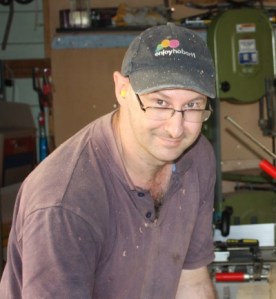
Llew Cain

Llew Cain – Are we 2D living in a 6D Future? A shed perspective.

Micromine, Surpac, Datamine, 3D Geomodeller, Vulcan, GoCAD, VRML, X3D, GIS, Vertical Mapper, Discover 3D, Target, Revit, BIM, ProjectWise, iModels, 3D PDF, Infrastructure Designer, CityEngine, WebGL, HTML5. Is it topology, clash detection or geodesign? Multi dimensional design has always been around in the mining industry, and more recently growing in engineering and architecture, what are the implications for GIS people? Is there is a paradigm shift just around the corner. Will the average GIS operator still be relevant in a future where analysis, understanding and communication are done in true 3D, 4D, 5D, 6D space? While taking a moment in the shed to ponder the big questions a comforting realisation is achieved. Or is it?
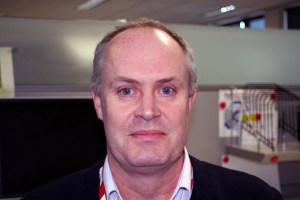
Matthew_Smith

Matthew Smith – Fires near Me mobile app

Fires near Me was an experiment. An experiment first in whether the public had a taste for this type of information delivered through a mobile device. The information was short and to the point — much like a focused sound bite in modern mainstream media. Indentifying the audience correctly allows content, app and map interaction, and information presentation to be tailored more precisely, giving greater user satisfaction.

Mobile app interaction with available networks, back-end data servers, and onboard functions (e.g. GPS) needs careful design in order to develop a useable architecture. Architecture for a non-finite — and mostly uncontrollable — user base must be fundamental to the app design.

Developers of mobile apps — certainly in 2010 — were less experienced in application development than is the case for other, enterprise application development. This requires more involvement in the design phase and closer management of the development and support phases.

Executive support tends to come after success with a launched product, rather than before a research and development project, and also needs careful management.
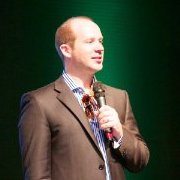
JodyGarnett

Jody Garnett – Business Intelligence and Mapping (with cartoons and demo)

A quick look at business intelligence industry: who they are, their perspective on life, and why they are investing in mapping technologies. Illustrated (cartoons) with a demo of smashing maps into the open source BIRT project.
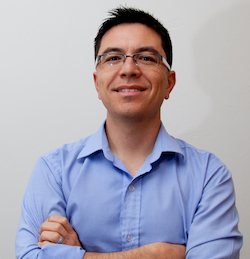
StephenLead

Stephen Lead – Esri’s 100-lines-or-less competition

In our industry we’re used to overblown and over-complicated mapping portals, which aim to solve every possible problem which could apply to every possible user.

In a refreshing twist, Esri launched a contest to design the exact opposite – a focussed mapping application built using a maximum of 100 lines of JavaScript code. Some of the entries were very simple, while some were extremely clever.

This talk will cover the best entries in the competition, plus some brief behind-the-scenes of the data scraping exercise in my own entry, which was a visualisation of the climate of Australia, using data obtained from 1,500 BOM weather stations.
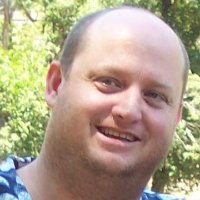
MarkWarton

Mark Warton – Mobile apps for the Easter Show

Building an geospatial type App for one of Australia’s largest Events should not be too hard? Right? Let me take you on a quick journey of the challenges of building an App in a short time frame, for a  large event where spatial content is only being confirmed just days before the event.

NarelleIrvine

Narelle Irvine – Mapping Kosciuszko Huts

Narelle has been involved for many years with the Kosciuszko Huts Association – a group that maintains the old cattlemen’s huts scattered throughout the park. When a webmap  showing the huts became desirable, Narelle volunteered. She embarked on a self-education program to understand and use open source mapping tools.
chris_broadfoot

Chris Broadfoot – Tracking with the Google Maps Android API

Brisbane GeoRabble #3 Speaker #4 – Ben Somerville

ImageWhen not sailing himself, or maintaining a web map devoted to the Brisbane to Gladstone Yacht Race, Ben Somerville is well known to ArcGIS users as an early adopter and advocate of Esri’s developer and server technologies.

As Spatial Systems Manager at Thiess, Ben is responsible for the management of a GIS that supports many projects across multiple disciplines and platforms. Ben currently spends most of his time supporting the Silcar Thiess Services joint venture which is designing and constructing the NBN in Qld, NSW and the ACT.

For GeoRabble Brisbane #3 Ben is planning to share his thoughts on managing large field work forces and the impact the NBN could have on the GIS industry.

Remaining FREE tickets available from http://georabblebrisbane3.eventbrite.com.au

GeoRabble Perth 5 – Event Review

A Return to Yesteryear Thunder and Lightning and Storms, Oh My!
14th March 2013, Leederville Hotel

The evening kicked off to the tune of a slightly tempestuous weather machination and some sixty-odd slightly damp GeoRabblers bunked down to listen, drinks in hand, as the yarns of geospatial speakers unravelled to the sound of rain against the Leedy’s tin roof.

Or something akin to that!GR5

The master of ceremonies Damian Shepherd led the keen GeoRabblers through the dark and stormy night, and kicked off the presentations by introducing Mike Bradford, CEO of Landgate. Onwards on a journey through time and space, Mike explored the evolutionary steps of spatial technology and glimpsed at the possibilities and trends for the future of the industry. From quasi prehistoric GPS receivers approaching the size of the MARS Curiosity Rover, to preparing for the influence of a predicted 1200 satellites going up in the next 10 years, the emphasis was on the fact that the future of GIS is coming at us harder and faster than ever before – and adaptation is the key to surviving and thriving in this (r)evolutionary world of all things spatial.

Next up, Roman Trubka and Cole from Curtin University flew us through some 3D urban planning scenario models, illustrating the inherent potential of spatial tools to explore, analyse and communicate the viability of development proposals and plans. Emphasis was on the intrinsic spatial nature of planning and how spatial tools of today can better inform and progress location-appropriate development.

Leading us into the fray of what it means to be a professional in the geospatial industry, Jen Hogan of Spatial Solutions started with the question that bubbles up at so many a social gathering and yet so frequently stumps many a geospatial professional: “So, what do you do?”. Between the blank look you get on saying something like ‘GIS’ to mumbling the ‘yes, something like Google Maps’ answer, the truth more often than not gets stuck in translation. Cue ‘Captain GIS’ to the rescue! Jen encouraged us speak out about all the things we love about spatial and not to hide away behind answers that make the awkward question go away. And, that when it comes down to it, emphasise that what we do is solve problems in a way that no one else can.

Tom Gardiner from ESRI took to the stage from there and further searched, queried and unravelled the meaning of what geospatial means in the context of world today. Leading us through an analysis done by high-school students at Hale School on finding the best location(s) for a sustainable community in Western Australia (as part of Spatial Technology in Schools Competition), on to consuming BoM data of cyclonic pathways in the context of the student’s analysis, Tom highlighted the ever expanding kaleidoscopic nature of spatial questions, data, technology and analytical approaches that sit at our fingertips.

With the tantalizing smell of hot pizza starting to waft through the air, the last speaker of the evening Charlie Gunningham from REIWA took to the stage and enraptured GeoRabblers with a tale of success, entrepreneurship and geospatial history. From mad Saturday morning rushes navigating the cityscape streets with nothing more than a street map-book and a handwritten trajectory in hand, was born the idea of placing real-estate sale advertisements onto an online map. It was an idea that then set the stage for real-estate websites across the world today. For some GeoRabblers the tale was a fond trip down memory lane, for others a unique chance to hear the history first-hand of the technology that is standard of the day. (Charlie reviews his first GeoRabble here)

DemocracySausage
The #democracysausage dataset made it into a GeoRabble side. Data collected on Twitter 9 March, 2013. Image/Data courtesy of @bogurk, @davecorgillous and @kevin_rudds_cat

And onwards into the stormy night did the GeoRabblers talk, eat and enjoy many a conversation.

Many thanks to the speakers of the night, to WaterCorp for supplying the projector and to the sponsors SSSI WA Region.

GeoRabble happens in various locations around Australia, is free and open to anyone, but frequently sells out. If you would like to talk at a future Perth GeoRabble event, please send an email with the title and a short description to perth@georabble.org.

Registrations Open for GeoRabble Melbourne #4

GeoRabble is back in Melbourne on Tuesday 23rd April at the European Bier Cafe (120 Exhibition St) with drinks, free food and geo-talks. Doors open 5:30pm, presentations start 6:30pm.

The line up of guest speakers are being finalised and we still have room for 1-2 more speakers, so let us know if you have a geo-story that you would like share. We are looking for interesting, entertaining or downright geeky presenters. If you fit that category, and have a geo-story to tell us then email your ideas to melbourne@georabble.org

Registration is now open and attendance is free so RSVP at  georabble-melb.eventbrite.com.au

A very special thanks to our GeoAwesome AAM Sponsor without whom we couldn’t run this event and provide food to everyone …

Image

GeoRabble Perth #6 – Big Data, Big Ideas

cyber_a“Imagine if the whole human race had been looking through one eye for all of our existence and, all of a sudden, scientists gave us the ability to open up a second eye. You’re not just getting more information, more data; you’re literally getting a whole new dimension. You’re getting depth and perspective, 3D vision. That’s what Big Data is, not simply more information but a new way to see or extract meaning from a sea of information. Simply put, Big Data is giving us a brand new way to see things.”

 
A Very Big Data Rabble
Coinciding with Big Data Week we’ve arranged a line up of speakers like never before.  Big Data Week is one of the most unique global platforms of interconnected community events focusing on the social, political, technological and commercial impacts of Big Data. It brings together a global community of data scientists, data technologies, data visualisers and data businesses spanning six major commercial, financial, social and technological sectors.

Speakers:

  • Gary Casham – Microsoft
  • Ian McCleod – WA Museum
  • Tim Heighfield – Researcher
  • Kevin Vinsen – SKA Project
  • Bryan Boruff – UWA
  • Paul Farrell – NGIS

Date: 23 April, 2013
Time: Doors open 5:30pm, Presentations from 6:00 pm
Location: 

Rubix Bar & Cafe
334 Murray Street
Perth

Format: A handful speakers, 10 mins each, usual rules.

Landgate_Logo

Registration: Attendance is free, but for catering purposes we need you to register!

We can’t hold these events without the help of the greater Geocommunity, so if you want to get involved let us know! This event brought to you by the Perth GeoRabble team and Landgate

Speaker #1 (not necessarily first on stage) for GeoRabble Brisbane #3 – Andy Stewart

Image

We have a bio and talk description for one of the previously announced speakers for GeoRabble Brisbane #3 (follow this link to register) on Tuesday 23 April 2016 6:00-8:00pm

According to an unnamed admirer:

Andy Stewart will be well known to many as one of the Senior Spatial Information officers at Department of Natural Resources. He has played a key role in a number of high profile projects involving both remote sensing and web-mapping applications. His current role sees him leading the existing client mapping services within Queensland government towards a Web 2.0 approach.

He has played a key role in responding to the natural disasters that have occurred across Queensland over the past couple of years, most recently the flooding that occurred in Bundaberg. This devastating event enabled the valuable lessons learned after 2011 with Cyclone Yasi to be put into action to enable rapid response to the needs of those needing accurate flood maps that were both quickly generated but also importantly, accurate. Andy will pass on some of the lessons learned and that were put into action.

Andy tells us that he is  a former Snow Skiing Instructor and qualified Adventure Racing and Triathlon Coach, who has represented Australia and finished the Hawaii Ironman Triathlon. Therefore he will be in unfamiliar territory attending an event in a bar, but we have assured him of a friendly audience. “

Co-sponsored by GIS Recruitment and AAM